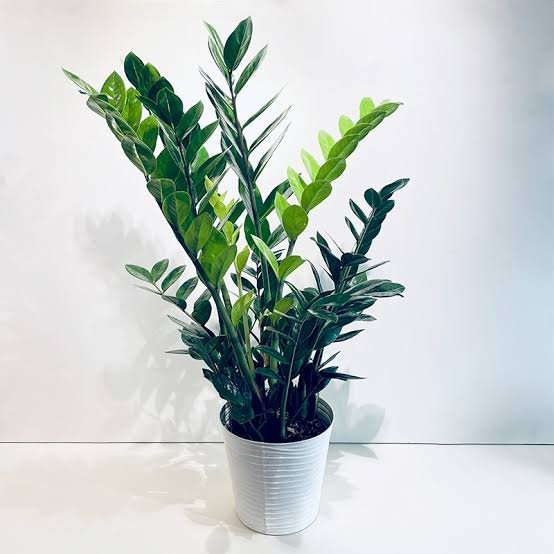
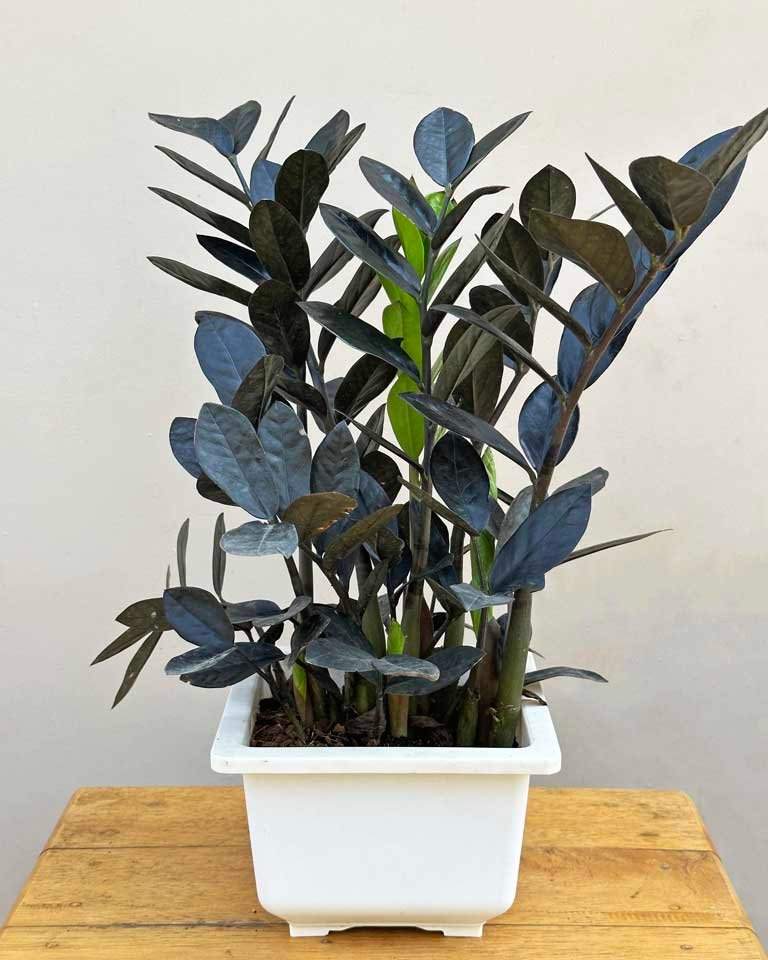
- Provide ZZ plants with bright indirect light. ZZ plants are great indoor plants because they tolerate low light conditions, but they grow faster in bright indirect light. They also thrive under fluorescent lights, making them a popular plant choice for office buildings. To prevent scorched leaves, avoid placing ZZ plants in direct sunlight.
- Use a loose potting mix in a container with drainage holes. A high-quality standard potting mix should be sufficient for a ZZ plant as long it has good drainage. For an even more effective growing medium, try mixing three parts standard potting mix with one part succulent soil mix. Make sure you place your potting mix in a container with drainage holes so the water can escape.
- Let the soil dry out between waterings. A ZZ plant’s rhizomes store water, making it drought-tolerant. In most growing conditions, you’ll only need to water ZZ plants once every couple weeks (potentially more if your plant is in bright light and in a hotter climate). Overwatering is more of a problem than underwatering, and it can lead to yellowing leaves and root rot.
- Use a liquid fertilizer for indoor plants. ZZ plants can thrive without fertilizer, but they’re slow growers, so using fertilizer will accelerate growth. Use a diluted liquid houseplant fertilizer once a month after watering, but only during the growing season (typically April through August).
- Maintain average temperature and humidity levels. ZZ plants grow best between 60 and 75 degrees Fahrenheit in an environment with average humidity. Keep your ZZ plant out of temperatures below 45 degrees Fahrenheit, and consider placing it near a humidifier if your air is on the dry side, particular in winter.
- Re-pot ZZ plants every spring. Re-potting is necessary once a ZZ plant outgrows its pot and becomes root-bound, meaning that its roots try to escape out of the drainage holes at the bottom of the pot. Re-pot once the growing season begins in the spring. You typically won’t need to re-pot a ZZ plant after its first five years of life.
- Monitor for aphid infestations. ZZ plants are resistant to almost all pests, but in rare cases, they may be plagued by aphids. Aphid infestations are more likely to occur if your ZZ plant is outside during warmer months. Aphids cause ZZ plant leaves to form yellow spots covered in a sticky substance. To rid your plant of aphids, spray them away with a strong spray from a garden hose, and cut off any diseased leaves. Avoid using leaf shine product. It may be tempting to use a leaf shine product to give your ZZ plant extra-shiny leaves, but leaf shine will clog your ZZ plant’s pores (called stomata) and prevent them from absorbing oxygen. Keep ZZ plants out of reach of children and pets. ZZ plants contain calcium oxalate, which is toxic when ingested and may cause painful intestinal issues. Those with sensitive skin may also experience skin irritation from touching ZZ plant leaves, so be careful when handling, and wash your hands after making any contact with your plant’s leaves.
Select options
This product has multiple variants. The options may be chosen on the product page
Select options
This product has multiple variants. The options may be chosen on the product page


Reviews
There are no reviews yet.